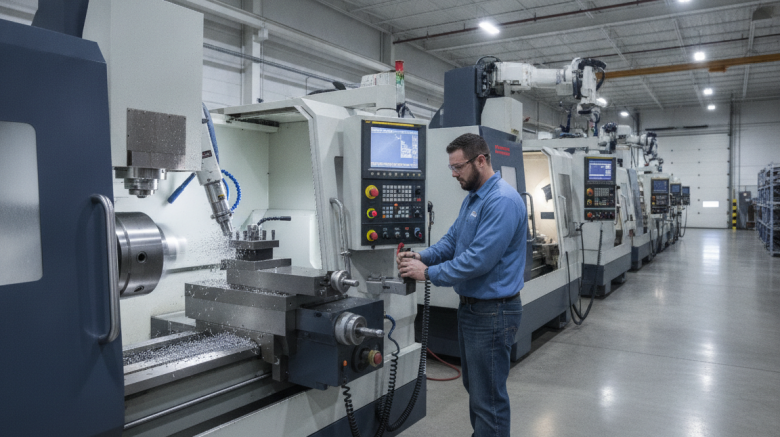
Houston has become a major destination for purchasing teams and engineering specialists searching for dependable precision components. Texas manufacturing contributes nearly 12% of the state’s total economic output, generating approximately $226 billion while supporting almost 900,000 jobs. That remarkable scale strengthens Industrial Machining Services Houston as providers broaden their capabilities, equipment, and service offerings.
Industrial Machining Services Houston
The following review explores Houston-area machining providers, ranging from locally owned specialists to national precision shops and regional contract-production companies. Examples include Lowrance Machine, available at www.lowrancemachine.com, along with RBR Machine and regional contract firms such as Centerline. Collectively, they reveal the depth and range of capabilities available throughout the Houston machining sector.
Product designers and original-equipment manufacturers across energy, aerospace, medical, and industrial markets can use this guide to compare and choose an appropriate machining company in Houston. The discussion includes conventional CNC milling, complex five-axis operations, precision component production, and fully managed turnkey services. Later sections explain available technologies, production capabilities, and supplier-selection criteria so teams can compare providers by tolerance control, turnaround time, and additional value-added services.
Main Points To Remember
- Houston’s extensive industrial base makes it an excellent location for sourcing high-precision machining services.
- The featured suppliers include local specialists, including Lowrance Machine, together with nationwide manufacturers operating in Houston.
- Houston shops offer capabilities ranging from basic milling operations to complex multi-axis machining and end-to-end production.
- The primary audience includes procurement managers, engineers, product developers, and OEM decision-makers.
- Later sections examine selection criteria, project costs, lead times, and practical use cases for choosing a Houston machine shop.
Industrial Machining Services Houston: Overview And Market Context
Manufacturing activity throughout Houston has grown substantially in response to rising requirements from energy, aviation, healthcare, and petrochemical businesses. Growing requirements for intricate, tightly toleranced parts have prompted Houston machining providers to increase both capacity and technical capability. Houston’s location near major highways, shipping ports, and railway networks also helps lower transportation expenses and shorten delivery schedules for regional customers.
The availability of skilled engineers, programmers, and machinists throughout Texas supports sophisticated production using 3-, 4-, and 5-axis equipment. By reducing repositioning and setup requirements, these capabilities allow industrial machine shops in Texas to achieve faster and more efficient production. Access to experienced local workers supports faster implementation of modern processes and reduces delays associated with hiring specialised employees.
Modern machining technologies are routinely incorporated into the everyday operations of leading Houston shops. Five-axis machining enables complicated surfaces to be completed with fewer fixtures and less time spent changing setups. Shops employ wire EDM to produce intricate cuts, narrow openings, and accurate details in hardened or thin conductive parts. Oversized milling equipment gives Houston suppliers the capacity to machine large components in one piece rather than outsourcing the work to another state.
Inspection systems are equally essential to the machines used to cut and shape the parts. Many shops use Zeiss coordinate measuring machines for first-piece reports, production inspection, and ongoing dimensional confirmation. The resulting inspection data demonstrates that critical parts satisfy required standards through reliable and auditable measurements.
Working with a nearby Houston machining provider improves communication and makes in-person design meetings, shop visits, and first-piece reviews easier to arrange. Being geographically close enables quicker responses when demand shifts, designs change, or emergency orders arise. These benefits reduce offshore supply risks and provide both direct local assistance and the marketability associated with made-in-USA production.
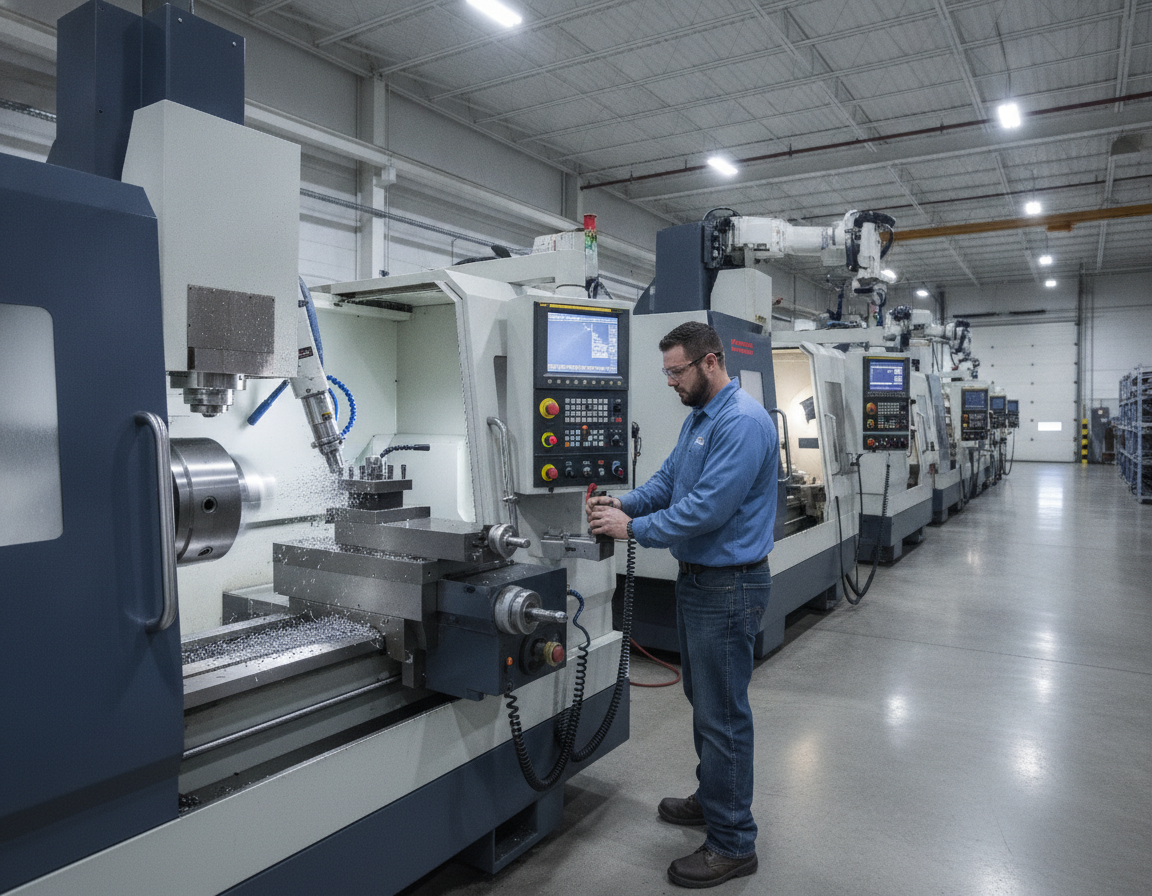 CNC Machine Shop Houston
Notable Machining Companies And Their Competitive Strengths
The Houston machining industry consists of independent local shops together with specialised contract-production businesses serving broader markets. The combination enables improved project speed, closer communication, and less complicated logistics compared with faraway suppliers. The providers below demonstrate strong CNC capabilities as well as wider industrial-manufacturing services.
Lowrance Machine is recognised in Houston for responsive customer service and close working relationships. The business focuses on CNC milling, made-to-order machining, and fabrication while prioritising quick project completion. Its Houston location makes site visits, quality reviews, and supply-chain coordination easier, creating a machine-shop option centred on accessibility and manufacturing agility.
RBR Machine provides precision and 5-axis machining for customers requiring complex parts and extensive production capabilities. Backed by ISO 9001:2015, ISO 13485, AS9100D, and ITAR compliance, the firm manages projects from early-stage samples to complete assemblies. The provider supports demanding sectors through quick quotations, detailed CMM measurement, API threading services, strong quality systems, and accelerated scheduling options.
Centerline, together with other area contract-production firms, accommodates projects ranging from small batches to substantial manufacturing runs. Centerline supplies certified domestic manufacturing under ISO 9001:2015 and AS9100D quality systems. These nearby manufacturers strengthen sourcing flexibility, shorten response times, and offer many buyers a reliable substitute for overseas suppliers.
Choosing between these companies requires consideration of design difficulty, compliance requirements, production volume, and turnaround needs. Work requiring complex 5-axis capability or large machining envelopes often fits providers with resources similar to those of RBR Machine. Projects dependent on close collaboration and short schedules may benefit from a customer-focused Houston machine shop such as Lowrance Machine.
| Provider | Core Strength | Relevant Certifications | Ideal Application |
|---|---|---|---|
| Lowrance Machine Houston | Local CNC milling and metal fabrication with responsive support | Established manufacturing procedures and in-house quality checks | Custom components, fast turnaround, and in-person collaboration |
| RBR Machine | Advanced multi-axis work, oversized milling, and complete manufacturing support | ISO 9001:2015, medical ISO 13485, aerospace AS9100D, and ITAR registration | High-precision aerospace, defence, medical, and oil-and-gas components |
| Centerline Contract Manufacturing | Flexible contract production from limited quantities to high volume | Certified ISO 9001:2015 and AS9100D systems | Long-term production work needing domestic sourcing and controlled quality |
When selecting CNC machining Houston partners, compare lead times, certification status, inspection resources, pricing, and geographic proximity. Local and regional firms support diverse market needs through experienced machining personnel, practical customer assistance, and extensive industrial services.
Capabilities And Services To Look For In A CNC Machine Shop
The process of identifying a suitable CNC shop should include a thorough examination of its manufacturing resources, quality procedures, and service range. It is important to confirm that a provider uses current technology, follows stringent inspection procedures, and can reduce supply-chain complexity. Providers integrating high-accuracy machining, metal fabrication, and secondary processing can supply components in an assembly-ready or finishing-ready condition.
Precision machining services depend on reliable control of dimensional tolerances. Typical tolerances may range from approximately ±0.001 inch to ±0.005 inch, depending on component geometry, material behaviour, and functional requirements. Companies serving aerospace, medical, and defence markets commonly use Zeiss CMM inspection, First Article Inspection procedures, optical measurement, nondestructive testing, and hardness verification. Recognised quality certifications confirm the use of documented systems that simplify customer audits and formal acceptance processes.
When additional assurance is needed, an external CMM specialist can inspect tightly toleranced parts regardless of which shop produced them. Independent verification provides another layer of confidence without disrupting the established sourcing arrangement.
Modern machining resources allow complicated components to be produced more efficiently and with fewer operations. Houston 5-axis capability permits complex surfaces to be machined with fewer fixtures, an important benefit for aviation and healthcare products. Wire EDM services in Houston are particularly effective for narrow slots, delicate walls, small radii, and detailed features in conductive materials. Oversized machining platforms enable regional firms to process major components with bed dimensions greater than 100 inches in some facilities.
Supporting technologies significantly broaden a shop’s manufacturing capability. Small precision parts suit Swiss-style turning, whereas robust CNC turning centres handle greater diameters and extended lengths. Houston shops offering milling, turning, and wire EDM together can manage diverse component families without extensive outsourcing.
A genuine turnkey program reduces project duration and removes much of the friction created by managing several suppliers. True turnkey manufacturing covers design assistance, sample creation, full production, outsourced treatments, final assembly, finishing, and delivery management. Customers can often obtain machining, plating, heat treat, anodising, kitting, and logistical coordination through one regional supplier agreement.
Additional services have greater value when a project must move quickly. Rush production, on-site finishing, and integrated assembly minimise separate transactions and accelerate commercial launch. A supplier integrating machining, fabrication, and turnkey coordination reduces uncertainty over responsibility for final quality.
How To Compare Houston Machine Shops And Choose A Partner
Begin by defining the project requirements in clear and measurable terms. Clarify the production stage, expected batch size, annual demand, and metals or plastics to be machined. The request should also address tolerances, cosmetic or functional finishes, inspection needs, and relevant compliance standards. Detailed specifications speed up estimates from Houston CNC shops and minimise misunderstandings that could lead to costly revisions.
Quality certifications and internal procedures should be reviewed carefully before selecting a manufacturer. Determine which recognised standards the shop follows, including ISO, AS9100D, medical-device certification, and defence registration where required. These standards support traceability, process documentation, inspection control, and regulatory acceptance within precision-machining services.
Evaluate whether the provider’s equipment and technical knowledge match the part’s actual manufacturing requirements. Where needed, ensure the shop operates multi-axis centres, EDM equipment, precision turning machines, and large-bed mills. Inspection resources should include suitable CMM systems, while supplementary offerings may cover heat treat, plating, finishing, and assembly. Reliable Houston machining companies normally publish or provide machine lists, capacity details, and examples of similar completed work.
The speed and reliability of the quoting process should be reviewed alongside expected manufacturing turnaround. Give preference to providers that issue detailed estimates quickly and can offer expedited production when necessary. Accurate estimates and dependable delivery information allow teams to plan more effectively and mitigate schedule risk.
Ask the machining provider to explain its inspection procedures and documentation practices. Request CMM reports, First Article Inspection procedures, raw-material certificates, and dimensional-inspection records. Reliable providers maintain detailed records that demonstrate conformity and simplify acceptance by customers or regulators.
Communication quality and access to local support should be treated as important supplier-selection factors. Nearby facilities allow customers to conduct reviews, inspect progress, and address production concerns without major travel or freight delays. Local manufacturers can respond more rapidly to emergency orders, drawing changes, replacement parts, and fluctuating demand.
Evaluate local and overseas quotations using total acquisition cost rather than unit price alone. Include shipping, duties, warehousing, delays, rejected parts, communication overhead, and revision costs in the calculation. Domestic machining can become the lower-cost option when logistical risks, inventory, and time-to-market are evaluated properly.
Examine references, case studies, and the supplier’s history within relevant industries. Seek manufacturers with demonstrated success in energy, aviation, healthcare, vehicle production, power, or comparable markets. Request evidence of comparable part complexity and dependable on-time delivery under actual production conditions.
Determine whether the supplier can support the project after initial delivery and expand production when demand grows. Evaluate whether the shop can support prototypes, pilot runs, regular production, final assembly, and longer-term sourcing agreements. Choosing a supplier that can grow with the program saves engineering time, qualification expense, and sourcing effort.
A formal evaluation checklist should include complete requirements, recognised certifications, matched capability, responsive pricing, documented inspection, accessibility, realistic total cost, relevant experience, and future capacity. Applying consistent criteria allows decision-makers to choose a Houston shop aligned with performance, schedule, quality, and financial requirements.
Cost, Lead Times, And Real-World Use Cases For Houston Industrial Machining
Houston machining costs are determined by factors including component complexity, material type, setup quantity, and production volume. Demanding dimensional requirements and additional operations, including heat treat and plating, generally increase project pricing. Hard-to-machine materials and complicated features increase programming effort, tool wear, and production time. The initial preparation for 5-axis work may be more expensive, yet reduced fixture use and setup time can deliver lower total machining costs.
A realistic project budget includes more than the cost assigned to each machined component. Shipping, purchasing administration, storage, customs duties, rejected components, and late delivery can all affect the final cost. Houston-area suppliers may lower indirect costs by simplifying logistics and allowing faster communication than offshore manufacturers.
Delivery schedules are affected by the selected provider, current production commitments, design requirements, and supporting operations. Companies offering rapid quotations and expedited scheduling can shorten prototype development and accelerate the beginning of production. Nearby machining reduces transportation complexity and allows projects to progress without the extended shipping associated with overseas suppliers. Local access enables customers to resolve problems quickly and place accelerated orders when unexpected requirements arise.
Work subject to strict industry requirements should be placed with shops maintaining formal quality credentials and coordinate-measurement resources. Strong compliance and measurement systems minimise rejected components, corrective work, approval problems, and production delays.
Common customer applications illustrate the breadth of technical services available from local machining providers. Oilfield projects commonly demand substantial machining envelopes, strong alloys, and parts capable of enduring high pressure and harsh environments. Complex flight and defence parts generally require 5-axis capability, AS9100D systems, controlled records, and exact dimensional verification. Medical projects often use wire EDM and Swiss machining alongside ISO 13485 systems and comprehensive traceability. Large mills, resilient alloys, and protective surface treatments support many power-generation and renewable-energy applications.
Shops combining rapid prototyping with turnkey industrial-manufacturing services are particularly useful for developing products efficiently. They can transfer designs from proof-of-concept through pilot production and full manufacturing while minimising supplier handoffs.
Houston shops with established quality programs and advanced inspection capability are often the safest choice for rush or regulated components. Choose providers with documented multi-axis experience when designs involve compound angles, deep features, or complex surfaces. For recurring orders and unpredictable volume, flexible contract manufacturers may provide more dependable long-range sourcing. Combining accessible local companies such as Lowrance Machine with specialised regional providers can balance cost, delivery speed, production capacity, and technical expertise.
Related: Understanding Google Algorithms: Your Houston SEO Advantage